HIFU vs Botox vs Facelift: What’s the Difference?
Loose skin, fine lines, forehead wrinkles and a softer jawline can all appear as the face ages. But they don’t all need the same treatment.
This is where many people get confused.
Someone searching for the best skin tightening treatment may come across HIFU, Botox, RF skin tightening, fillers and facelift surgery. These treatments work in very different ways.
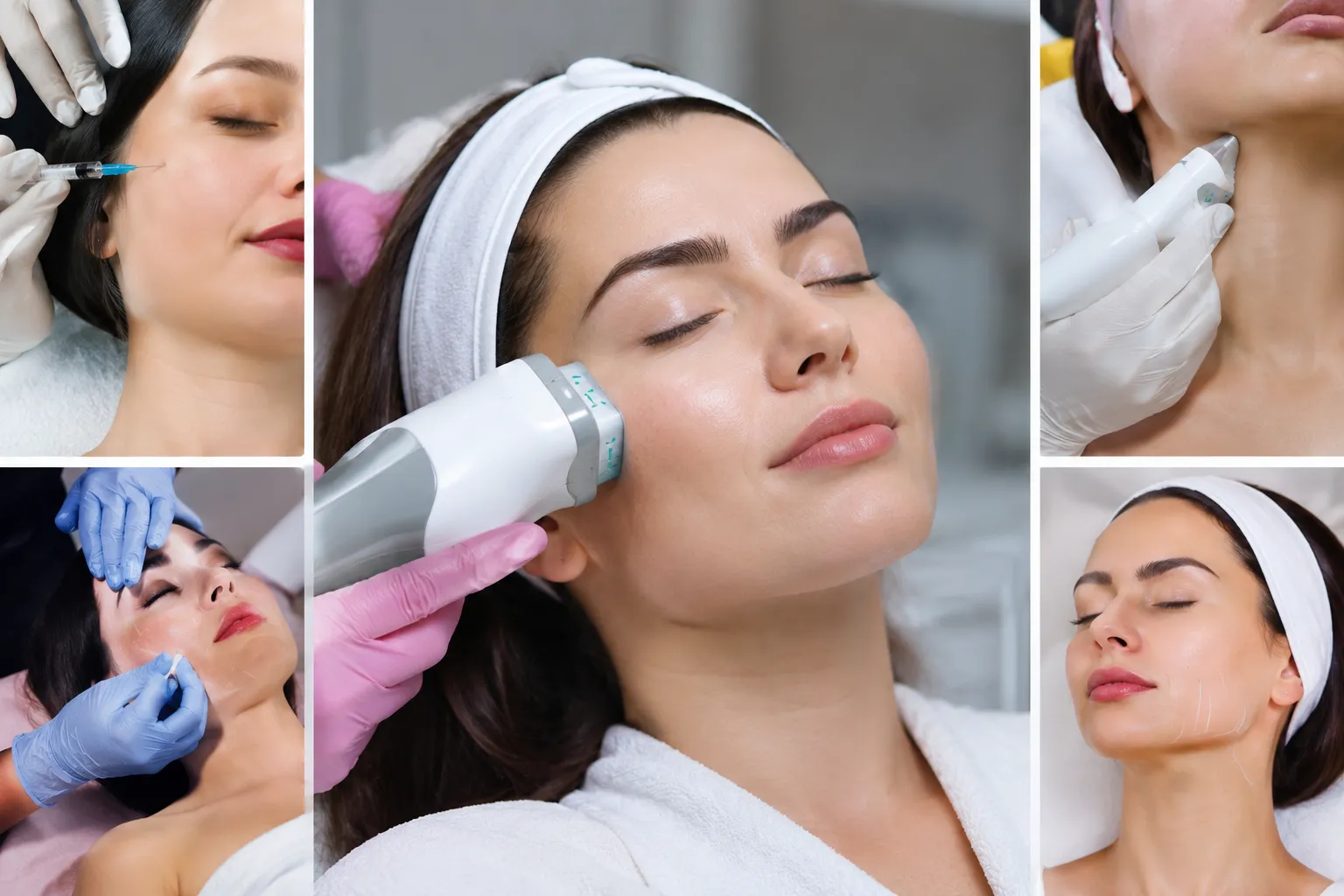
HIFU uses focused ultrasound energy to target deeper tissue and stimulate a tightening and collagen-remodelling response. Botox temporarily relaxes selected facial muscles to reduce certain expression lines. A facelift is surgery designed to reposition and remove excess facial and neck skin.
So, which one should you choose?
The answer depends less on your age and more on what is actually bothering you.
If your main concern is mild facial sagging, HIFU may be worth discussing. If your concern is dynamic forehead or frown lines, Botox may be more appropriate. If there is significant loose skin and jowling, a surgical facelift may provide a different level of correction.
The important point is simple: HIFU, Botox and facelift surgery are not interchangeable treatments.
What Is a Skin Tightening Treatment?
A skin tightening treatment is designed to improve the appearance of loose, lax or less-firm skin.
As we age, several changes occur at the same time. Collagen and elastin decline, facial fat can shift or reduce, skin becomes thinner and repeated muscle movement contributes to expression lines.
Sun exposure, smoking, genetics, weight changes and lifestyle factors can also affect how quickly visible ageing develops.
Skin tightening treatments aim to improve one or more of these concerns.
Depending on the technology, treatment may work on:
- Skin firmness
- Mild to moderate skin laxity
- Jawline definition
- Neck laxity
- Fine lines
- Wrinkles
- Collagen production
- Overall skin texture
However, tightening the skin is not the same as removing excess skin.
That distinction becomes especially important when comparing a non-surgical treatment such as HIFU with a facelift.
HIFU for Skin Tightening
HIFU, or High-Intensity Focused Ultrasound, is a non-invasive energy-based treatment used for selected cases of facial and neck skin laxity.
Instead of cutting the skin, HIFU delivers focused ultrasound energy at controlled depths.
The goal is to create a controlled thermal effect in targeted tissue. This can trigger tissue contraction and a longer-term collagen-remodelling response.
Recent reviews of HIFU research have found evidence of improvement in facial skin laxity, particularly around areas such as the lower face and neck. However, results vary according to the patient, device, treatment settings and degree of laxity.
That last point matters.
HIFU isn’t a magic “instant facelift.”
It is generally better suited to mild to moderate skin laxity than to severe excess skin.
What areas can HIFU treat?
Depending on the device and treatment plan, HIFU may be considered for:
- Lower face
- Jawline
- Cheeks
- Chin area
- Neck
- Submental area
- Brow region
A qualified clinician should determine whether the treatment is appropriate for the area being treated.
What does HIFU feel like?
Experience varies between people and devices.
Some patients describe warmth, pressure, tingling or brief discomfort during treatment. Temporary redness, swelling or sensitivity can occur.
A systematic review of microfocused ultrasound found that most reported adverse effects were temporary, although uncommon complications have also been reported.
How Does HIFU Work?
Think of HIFU as a treatment that works beneath the surface rather than simply sitting on top of the skin.
Focused ultrasound energy is delivered to selected tissue depths. The controlled energy creates small thermal treatment points.
This can encourage:
- Tissue contraction
- Collagen remodelling
- New collagen formation
- Gradual improvement in skin firmness
The improvement is usually gradual rather than an immediate dramatic change.
Research published in 2025 reviewed 45 clinical trials and cohort studies involving HIFU for aesthetic applications. The review found evidence of skin-tightening benefits, particularly in the lower face, neck and periorbital regions, while also noting that treatment protocols and patient selection still require careful consideration.
Is HIFU permanent?
No.
HIFU doesn’t stop the natural ageing process.
Collagen continues to change with age, and skin can become lax again over time. Your result may therefore require maintenance based on your individual skin condition and treatment plan.
Botox for Facial Lines and Wrinkles
Botox is frequently mentioned alongside skin tightening treatments, but its mechanism is different.
Botulinum toxin temporarily reduces the activity of selected muscles.
When facial muscles repeatedly contract, they can contribute to dynamic lines such as:
- Frown lines between the eyebrows
- Forehead lines
- Crow’s feet
Botulinum toxin can soften these lines by temporarily relaxing targeted muscles. The American Academy of Dermatology notes that results commonly become visible within several days and generally last around three to four months, sometimes longer.
Does Botox tighten loose skin?
Not in the same way as HIFU.
Botox is primarily a wrinkle-reduction treatment. It does not remove excess skin.
This is why someone with significant jawline laxity may not get the result they expect from Botox alone.
Botox can be very useful when muscle movement is the main cause of visible lines. HIFU may be more relevant when tissue laxity is the primary concern.
Why Botox Is Not the Same as Skin Tightening
Imagine two different concerns.
Person A has smooth, firm skin but develops deep forehead lines whenever they raise their eyebrows.
Person B has relatively few forehead wrinkles but notices loose skin around the jawline and neck.
Their concerns are different.
Person A may benefit from discussing botulinum toxin.
Person B may be a candidate for an energy-based skin tightening procedure such as HIFU, depending on clinical assessment.
This is why searching for the best treatment for face wrinkles and searching for the best treatment for sagging skin can lead to different answers.
Facelift Surgery for Sagging Skin
A facelift, medically known as rhytidectomy, is a surgical procedure used to address visible signs of facial and neck ageing.
According to the American Society of Plastic Surgeons, facelift surgery can improve concerns including facial skin relaxation, jowls, deep fold lines and loose neck skin.
A facelift is fundamentally different from HIFU and Botox.
It is surgery.
During the procedure, the surgeon makes planned incisions, repositions tissues and addresses excess skin according to the patient’s anatomy and treatment goals.
What can a facelift address?
A facelift may be considered when someone has:
- Significant facial skin sagging
- Pronounced jowls
- Loose skin around the lower face
- Neck laxity
- Deeper folds related to facial ageing
- Excess skin that non-surgical treatment cannot adequately address
A facelift can provide a greater degree of correction than non-surgical rejuvenation, but it also involves surgery, recovery and surgical risks.
The American Society of Plastic Surgeons lists potential risks including bleeding, infection, poor wound healing, numbness, prolonged swelling, scarring and facial nerve injury, among others.
HIFU vs Botox vs Facelift: Quick Comparison
| Feature | HIFU | Botox | Facelift |
|---|---|---|---|
| Main purpose | Skin tightening and lifting | Dynamic wrinkle reduction | Significant facial and neck rejuvenation |
| Surgery | No | No | Yes |
| Targets muscle movement | No | Yes | No |
| Addresses loose skin | Mild to moderate laxity | Limited | Yes, including excess skin |
| Jawline concerns | May help selected patients | Not the primary use | Can provide substantial correction |
| Forehead expression lines | Not the primary use | Yes | Not the primary treatment |
| Downtime | Usually minimal | Usually minimal | Significant compared with non-surgical options |
| Results | Gradual | Usually develops within days | Develop as swelling settles |
| Maintenance | May be required | Repeated treatments are generally needed | Long-lasting but ageing continues |
| Best suited for | Selected mild-to-moderate laxity | Dynamic lines | More significant laxity and excess skin |
There isn’t one universally “best” option.
The right choice depends on the problem you want to correct.
Which Treatment Is Best for Mild Skin Laxity?
If your skin has started to feel less firm but you don’t have a large amount of excess skin, a non-surgical treatment may be considered.
HIFU can be an option for selected patients with mild to moderate facial laxity. Research supports its potential for tightening, although outcomes are not identical for every patient.
A consultation should assess:
- Degree of skin laxity
- Skin thickness
- Facial structure
- Amount of facial fat
- Age-related volume changes
- Treatment goals
- Previous cosmetic procedures
This is important because aggressive tightening isn’t always better.
For example, someone with a thin face and little facial fat may need a different strategy from someone with fuller cheeks and more visible lower-face laxity.
Which Treatment Is Better for Wrinkles?
First, identify what kind of wrinkle you’re dealing with.
Dynamic wrinkles
These appear or become deeper when facial muscles move.
Examples include forehead lines, frown lines and crow’s feet.
Botulinum toxin is specifically used to reduce the appearance of selected dynamic facial lines.
Static wrinkles
These remain visible even when your face is relaxed.
They can be associated with collagen loss, sun damage, skin thinning and repeated movement over time.
A dermatologist may consider a combination of approaches depending on the cause.
Skin texture and fine lines
Energy-based treatments, resurfacing procedures, skincare and other approaches may have a role depending on the concern.
The lesson is simple:
Don’t choose a treatment because it is popular. Choose it because it matches the reason the line or wrinkle is present.
Which Treatment Is Better for Jowls and a Sagging Jawline?
Jowls are often caused by changes in skin, connective tissue and facial volume as the face ages.
Mild jawline laxity may sometimes be treated with non-surgical approaches.
HIFU may help selected patients with mild to moderate laxity, especially when the goal is a subtle lift or improvement in firmness.
However, significant loose skin is different.
A facelift is designed to surgically improve visible signs of facial and neck ageing, including jowling and loose skin.
So if you’re searching for HIFU for jowls, the important question isn’t simply whether HIFU “works.”
The better question is:
How much laxity do you have, and what level of improvement are you expecting?
Can HIFU Replace a Facelift?
Not completely.
HIFU and facelift surgery work at different levels and are suitable for different degrees of ageing.
HIFU is a non-invasive approach that can provide gradual improvement in selected patients.
A facelift is surgery and can address more significant sagging and excess skin.
The American Society of Plastic Surgeons specifically notes that minimally invasive rejuvenation treatments cannot achieve the same results as facelift surgery, although they may complement surgery or delay when surgery becomes appropriate.
This doesn’t make one treatment “better.”
It means they solve different problems.
If someone has mild laxity and wants no surgery, HIFU may make sense.
If someone has significant excess skin and wants a major structural change, surgery may be more appropriate.
What About Skin Tightening Without Surgery?
Many people search for:
- Non-surgical facelift
- Non-invasive skin tightening
- Skin tightening without surgery
- Best treatment for loose facial skin
- Face lifting treatment without surgery
- Skin tightening for jawline
- Neck skin tightening
- Collagen stimulation treatment
- Skin tightening treatment for sagging cheeks
These searches reflect an important preference: people want visible improvement without a surgical procedure.
Options may include energy-based treatments such as HIFU or radiofrequency-based procedures, depending on the patient’s skin and goals.
But “non-surgical facelift” should not be interpreted as meaning that a non-surgical treatment produces exactly the same result as a surgical facelift.
A good treatment plan sets realistic expectations from the beginning.
How to Choose the Right Skin Tightening Treatment
Instead of asking, “Which treatment is the best?”, ask these five questions.
1. What is my main concern?
Is it:
- Sagging skin?
- Fine lines?
- Deep wrinkles?
- Jowls?
- Loose neck skin?
- Loss of firmness?
- Poor skin texture?
2. How much improvement do I want?
A subtle improvement and a dramatic lift are very different goals.
3. Do I want surgery?
If the answer is no, surgical facelift surgery is automatically excluded from your current options.
4. How much downtime can I accept?
A busy professional may prefer a treatment with little downtime.
Someone who wants a more substantial structural correction may accept a longer recovery.
5. Is my expectation realistic?
This is perhaps the most important question.
No cosmetic procedure can stop ageing completely.
What Happens During a Skin Tightening Consultation?
A good consultation shouldn’t begin with a treatment name.
It should begin with your concern.
The clinician may assess:
- Skin laxity
- Facial symmetry
- Jawline definition
- Neck skin
- Facial volume
- Wrinkle pattern
- Skin quality
- Previous treatments
- Medical history
- Your expectations
You should also explain what result you’re hoping to achieve.
For example:
“I want my jawline to look slightly sharper, but I don’t want a dramatic change.”
That is more useful than simply saying:
“I want a facelift.”
The first statement describes your goal.
The second names a procedure.
Those aren’t necessarily the same thing.
Common Mistakes People Make
Mistake 1: Choosing a treatment because it’s trending
A popular treatment isn’t automatically right for every face.
Mistake 2: Expecting Botox to tighten loose skin
Botox and HIFU have different mechanisms.
Mistake 3: Expecting HIFU to remove large amounts of excess skin
HIFU is not surgical skin removal.
Mistake 4: Comparing prices before comparing treatments
A cheaper procedure isn’t a bargain if it doesn’t address your concern.
Mistake 5: Ignoring the provider’s expertise
Cosmetic treatments require proper assessment and technique.
The American Academy of Dermatology stresses that safe cosmetic treatment requires medical knowledge and recommends qualified dermatology professionals for procedures such as botulinum toxin injections.
Mistake 6: Looking only at before-and-after photographs
Photos can be helpful, but they don’t tell the whole story.
Lighting, camera angle, facial expression and time between photographs can change how results appear.
Real-Life Treatment Scenarios
Scenario 1: “My jawline is becoming less defined.”
Suppose you’re in your late 30s or 40s and notice mild laxity around your jawline.
You don’t have significant excess skin, and you don’t want surgery.
A clinician may consider whether HIFU or another non-surgical skin tightening option is appropriate.
Scenario 2: “My forehead wrinkles are becoming obvious.”
If your skin remains relatively firm but forehead lines appear strongly when you raise your eyebrows, the main issue may be dynamic muscle movement.
Botulinum toxin may be discussed.
Scenario 3: “I have heavy jowls and loose neck skin.”
If there is significant excess skin, a non-surgical procedure may not provide the level of correction you expect.
A surgical consultation may be more appropriate.
Scenario 4: “I want a fresher look but don’t want to look different.”
This is common.
The treatment plan should focus on preserving your natural facial movement and proportions while addressing the specific concern.
A good aesthetic result isn’t necessarily the most dramatic result.
Results, Downtime and Maintenance
HIFU results
HIFU results tend to develop gradually.
The research literature suggests improvement can continue over months as collagen remodelling occurs. A 2025 systematic review reported measurable skin-laxity improvements in several facial areas, while also noting variability between treatment protocols.
Botox results
Botulinum toxin results usually become noticeable within several days. The AAD states that effects commonly last around three to four months, sometimes longer.
Facelift results
A facelift involves a recovery period.
According to the American Society of Plastic Surgeons, many patients are publicly presentable within around 10–14 days, while the face can take several months to feel fully back to normal.
Your actual recovery depends on the procedure and individual healing.
Does Age Decide Which Treatment You Need?
Not by itself.
Two people of the same age can have completely different facial ageing patterns.
One 45-year-old may have excellent skin firmness but noticeable forehead lines.
Another may have relatively few wrinkles but significant lower-face laxity.
A third may have volume loss rather than true skin laxity.
So age should be considered, but it shouldn’t be the only deciding factor.
Skin quality, anatomy, lifestyle, genetics, sun exposure and treatment goals all matter.
Frequently Asked Questions
1. What is the best skin tightening treatment for the face?
There isn’t one treatment that is best for everyone. HIFU may suit selected patients with mild to moderate facial laxity. More significant excess skin may require surgical assessment. The correct choice depends on your anatomy, skin condition and goals.
2. Is HIFU better than Botox?
They treat different concerns. HIFU is used for selected skin-laxity concerns, while Botox temporarily relaxes targeted muscles to reduce dynamic facial lines. Comparing them as if they perform the same job can be misleading.
3. Is HIFU better than a facelift?
HIFU is non-invasive and generally offers a more gradual, less dramatic approach. A facelift is surgery and can address significant sagging and excess skin. The American Society of Plastic Surgeons notes that non-surgical treatments cannot achieve the same results as facelift surgery.
4. Can HIFU remove sagging skin?
HIFU can improve selected cases of skin laxity, but it does not surgically remove excess skin. Results are generally more suitable for mild to moderate laxity than significant excess skin.
5. How long does HIFU skin tightening last?
The duration varies between individuals and treatment protocols. Ageing continues after treatment, so results aren’t permanent. Research has reported improvements that can continue for months, but long-term outcomes vary.
6. Does Botox tighten the jawline?
Botox isn’t primarily a skin-tightening treatment. In selected cases, targeted muscle treatment may alter facial contour, but it should not be considered equivalent to HIFU or facelift surgery for loose skin.
7. Is HIFU painful?
People experience HIFU differently. Some describe brief warmth, tingling or discomfort. Temporary redness, swelling or sensitivity may occur. Treatment settings and the device used can affect comfort.
8. Is a facelift permanent?
A facelift can create long-lasting improvement, but it does not stop ageing. The face continues to change naturally over time.
9. Can I combine Botox with a skin tightening treatment?
In some patients, different treatments may be combined because they address different concerns. Whether combining treatments is appropriate depends on your facial anatomy, medical history and treatment goals.
10. How do I know which treatment is right for me?
Start with a professional assessment rather than choosing a procedure based only on online photographs or price. Explain your main concern, desired level of improvement and tolerance for downtime.
Expert Tips Before Choosing a Skin Tightening Treatment
Don’t start with the machine. Start with the problem.
If your problem is loose skin, ask about skin laxity.
If your problem is expression lines, ask about dynamic wrinkles.
If your problem is facial volume loss, a tightening procedure alone may not address the entire concern.
If your problem is significant excess skin, ask whether a surgical option should be considered.
Also ask these questions before treatment:
- What exactly is causing my concern?
- What improvement is realistic?
- Is this treatment appropriate for my skin type?
- How many sessions may I need?
- What side effects should I expect?
- What is the expected downtime?
- When should I expect results?
- How long might the improvement last?
- What alternatives should I consider?
- Who will perform the procedure?
For injectable treatments, the AAD recommends asking about the practitioner’s qualifications and experience because technique and medical knowledge are important to safe treatment.
HIFU vs Botox vs Facelift: The Bottom Line
There is no single winner in the HIFU vs Botox vs facelift debate.
Each treatment solves a different problem.
HIFU may be appropriate for selected people with mild to moderate skin laxity who want a non-surgical approach.
Botox is primarily used to reduce selected dynamic facial lines caused by muscle movement.
Facelift surgery is designed to address more significant facial and neck ageing, including sagging skin and jowls.
The best skin tightening treatment is therefore the one that matches your actual concern, skin condition and desired outcome.
If you’re unsure, don’t choose a treatment simply because someone else had good results with it. Your facial structure may be completely different.
Skin Tightening Treatment at Archana Wellness
If you’re considering treatment for facial laxity, wrinkles, a less-defined jawline or visible signs of ageing, a proper assessment is the best place to start.
At Archana Wellness, the focus should be on understanding your concern first and then discussing suitable aesthetic options based on your individual needs.
Rather than asking, “Which treatment is trending?”, ask:
“What is causing my concern, and which treatment is most suitable for my face?”
That approach can help you make a more informed decision about HIFU, Botox, other non-surgical options or whether a surgical consultation is more appropriate.
Book a consultation with Archana Wellness to discuss your skin concerns and understand which approach may be suitable for you.