Botox has become a popular cosmetic treatment for people who want to reduce forehead lines, crow’s feet and other facial wrinkles without surgery. The procedure is relatively quick, and most patients can return to their usual activities soon afterwards.
Still, one question deserves attention before booking an appointment: Is Botox safe, particularly if you plan to continue treatment for several years?
You may have heard concerns about facial muscle weakness, frozen expressions, drooping eyelids or permanent changes to the skin. Some of these concerns relate to genuine medical risks, while others are based on misconceptions.
Botox has an established record of clinical use and is generally well tolerated when administered appropriately by qualified medical professionals. However, it is a prescription medicine, not a risk-free beauty treatment.
This guide explains the short-term and long-term effects of Botox, possible complications, how to reduce treatment risks, and what to consider before deciding whether it is suitable for you.
If you are considering Botox Treatment in Santacruz, understanding its benefits, possible side effects, and long-term safety considerations can help you make an informed decision about your skin and aesthetic goals.
Is Botox Safe for Your Face?
Botox is generally considered safe for appropriately selected adults when a qualified medical professional uses an authorised product at an appropriate dose. However, side effects and serious complications are possible.
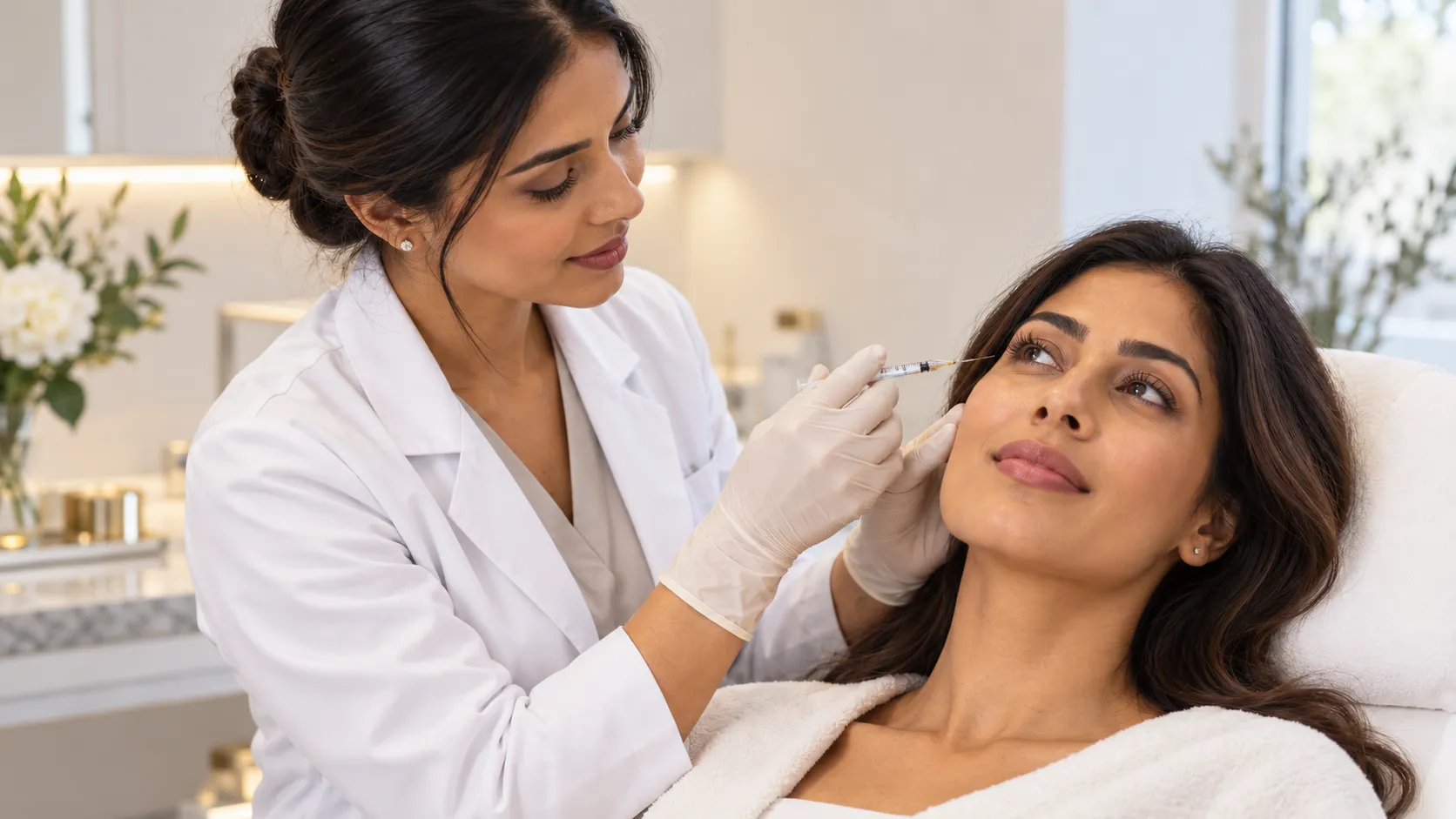
Botox contains a purified form of botulinum toxin type A. It temporarily blocks signals between nerves and selected muscles, reducing the muscle movements responsible for certain facial expression lines.
For example, repeatedly raising your eyebrows creates movement across your forehead. Over time, these movements can contribute to visible forehead wrinkles. Botox temporarily reduces the activity of the relevant muscles, softening the appearance of these lines.
Common cosmetic treatment areas include:
- Forehead lines
- Frown lines between the eyebrows
- Crow’s feet around the eyes
- Selected other facial or neck areas, depending on clinical suitability and product approval
Botox does not work in the same way as dermal fillers. It does not add facial volume or directly tighten loose skin.
The outcome depends on the patient’s facial anatomy, the amount injected, injection placement and the professional’s experience.
The aim is generally to soften unwanted expression lines while maintaining a natural-looking appearance.
What Are the Common Side Effects of Botox?
Most Botox side effects are mild and temporary, but their severity and duration can vary.
Following treatment, some patients notice redness, swelling, tenderness or bruising at the injection sites. Headaches can also occur.
Less commonly, the toxin’s effect on nearby muscles may cause an uneven facial appearance or temporarily drooping eyelid or eyebrow.
Botox Side Effects and How Long They May Last
| Side Effect | Typical Duration or Course | What to Do |
|---|---|---|
| Redness | Usually hours to a few days | Monitor and follow aftercare advice |
| Mild swelling | Often resolves within a few days | Contact the clinician if worsening |
| Bruising | Several days to around two weeks | Allow time to resolve |
| Injection-site tenderness | Usually short-lived | Seek assessment if persistent |
| Headache | Often temporary | Contact the clinician if severe or prolonged |
| Drooping eyelid or eyebrow | May last weeks or longer | Arrange a medical review |
| Uneven facial movement | May improve as treatment wears off | Discuss with the treating clinician |
These are general estimates, not guaranteed timelines.
Severe pain, increasing redness, fever, unusual weakness or persistent symptoms warrant medical assessment.
What Are the Long-Term Effects of Botox?
For patients considering regular injections, long-term safety is an important concern.
Botox has been used medically and cosmetically for decades, and its short-term effects are relatively well understood. However, studies of continuous cosmetic treatment over multiple decades remain limited.
1. Can Botox Weaken Facial Muscles Over Time?
Yes. Repeated botulinum toxin injections can reduce the activity and, in some cases, the size of treated muscles.
Muscles that remain less active for prolonged periods may become thinner. This is sometimes called muscle atrophy.
However, the degree of muscle change differs between individuals. It does not mean everyone receiving regular Botox will develop noticeable facial weakness.
Some changes may improve after treatment stops, but complete recovery timelines and the long-term significance of repeated muscle changes are not fully established.
2. Can Botox Make Your Face Look Frozen?
An overly restricted facial appearance can occur if treatment excessively relaxes the muscles involved in expression.
This may happen because of inappropriate dosing, injection placement or treatment that does not adequately account for individual facial anatomy.
A qualified clinician should assess how your face moves naturally and explain the balance between wrinkle reduction and maintaining expressions.
3. Can Botox Stop Working After Repeated Treatments?
Some patients notice that their Botox results become less noticeable or do not last as long as expected.
Possible explanations include differences in dosing, injection technique, muscle activity and individual treatment response.
In uncommon cases, the body may develop neutralising antibodies that reduce the effectiveness of botulinum toxin.
If Botox stops producing the expected effect, the appropriate response is a clinical reassessment rather than automatically increasing the dose.
Is Botox Safe After 5, 10 or 20 Years?
There is no universal answer because long-term safety depends on the treatment history, product, injection frequency, dosage and individual health.
Some patients undergo repeated treatments for many years without major complications. However, this does not guarantee that continuous treatment for 10 or 20 years is risk-free.
Long-term considerations include:
- Changes in muscle size and strength
- Changes in facial expression patterns
- Variation in treatment response
- Possible antibody-related resistance
- Natural facial ageing occurring alongside treatment
- The cumulative effects of repeated treatment
What Does Research Tell Us?
Clinical research supports the effectiveness of botulinum toxin for particular cosmetic indications, and repeated treatment has been studied.
However, evidence from shorter clinical trials cannot automatically establish the safety of uninterrupted treatment over several decades.
A responsible approach involves periodically reassessing whether treatment remains necessary, whether the current dose is appropriate, and whether your aesthetic goals have changed.
What Happens When You Stop Getting Botox?
One common concern is that stopping Botox will make wrinkles suddenly become worse.
In general, stopping Botox does not cause the skin to age faster simply because treatment has ended.
As the medicine gradually wears off, the treated muscles begin contracting again. Expression lines can become more noticeable, while the natural ageing process continues.
Cosmetic Botox results often last approximately three to four months, although individual results vary.
You are not required to continue Botox indefinitely after starting treatment.
Can Botox Cause Permanent Damage?
Permanent injury is not a typical expected outcome of appropriately administered cosmetic Botox, but serious or lasting complications cannot be ruled out.
Most common cosmetic reactions are temporary. However, botulinum toxin products carry important warnings concerning the possibility of toxin effects spreading beyond the injection area.
Potential symptoms include:
- Generalised muscle weakness
- Double vision or significant visual disturbance
- Difficulty swallowing
- Changes in speech
- Breathing difficulties
These symptoms can develop hours to weeks after an injection.
Difficulty breathing, swallowing or speaking after Botox requires immediate emergency medical care. Do not wait to see whether the symptoms improve.
Who Should Avoid Botox?
Not everyone is a suitable candidate for botulinum toxin treatment.
Botox Cosmetic should not be administered to patients with a known hypersensitivity to botulinum toxin preparations or their ingredients, or an infection at the planned injection site.
Additional caution is essential for people who:
- Have neuromuscular conditions such as myasthenia gravis or Lambert-Eaton syndrome
- Have existing swallowing or breathing problems
- Have previously experienced adverse reactions to botulinum toxin
- Take medicines that affect neuromuscular transmission
- Have undergone recent injectable cosmetic procedures
- Are pregnant or breastfeeding
Is Botox Safe During Pregnancy or Breastfeeding?
There is insufficient clinical evidence to establish the safety of cosmetic botulinum toxin injections during pregnancy or breastfeeding.
Because cosmetic treatment is elective, postponing it during these periods is generally recommended.
Always inform your treating clinician if you are pregnant, planning pregnancy or breastfeeding.
Is Botox Safe in Your 20s, 30s, 40s and 50s?
There is no single ideal age for Botox. Medical suitability depends more on facial anatomy, wrinkle patterns, medical history and treatment goals than age alone.
Botox in Your 20s
Some younger adults consider Botox for early expression lines.
However, there is no medical requirement to start Botox in your twenties to prevent ageing. Evidence does not establish that routine early injections are necessary for everyone.
A dermatologist may recommend skincare, daily sunscreen or other measures instead.
Botox in Your 30s
Expression lines may become more noticeable during this decade.
Botox can be considered if wrinkles associated with muscle movement are a concern, but treatment should remain an individual choice.
Botox in Your 40s
In your forties, both expression lines and age-related skin changes may become more pronounced.
Botox can soften selected movement-related wrinkles, although it may not fully address deeper static lines, pigmentation or skin laxity.
Botox in Your 50s and Beyond
Older adults may benefit from appropriately selected botulinum toxin treatments.
However, age-related muscle changes, skin laxity, medication use and existing medical conditions may influence treatment suitability and outcomes.
The safest decision is based on clinical evaluation, not a person’s age alone.
How Often Can You Safely Get Botox?
Botox results commonly last around three to four months, but treatment should not automatically be repeated on a fixed schedule.
The appropriate interval depends on the product, treatment area, muscle activity, response and medical assessment.
For BOTOX Cosmetic, the safety and effectiveness of administering treatment more frequently than every three months have not been clinically evaluated.
Receiving injections too frequently is not necessarily better and could increase treatment exposure without improving results.
A clinician should review your response before recommending another session.
Botox Aftercare: What to Expect During the First 24–48 Hours
Botox generally requires minimal downtime, but appropriate aftercare matters.
Immediately After Treatment
Small injection-site bumps, redness or tenderness may occur.
Follow your clinician’s instructions and avoid rubbing or massaging the treated areas.
During the First Few Hours
Most patients can return to ordinary daily activities soon after treatment.
The American Academy of Dermatology advises waiting at least two hours before strenuous physical activity. Your clinician may recommend additional precautions according to your treatment.
During the First 24 Hours
Avoid applying excessive pressure or massaging the injection sites.
If using makeup, apply it gently rather than rubbing the skin.
Follow individual advice regarding exercise, other facial treatments and skincare products.
During the Next 24–48 Hours
Minor bruising or swelling may still be visible.
Botox results are not usually immediate. Some people begin noticing changes within several days, while full effects may take approximately two weeks.
Contact your clinician if you experience unexpected or worsening symptoms.
Important: Aftercare recommendations may vary. The instructions provided by your treating medical professional should take priority over general online advice.
How Do You Know If Botox Is Genuine?
Product authenticity is an essential part of injection safety.
Counterfeit, improperly stored or unauthorised botulinum toxin products can create serious health risks.
Before treatment, patients can ask:
- What is the exact brand and manufacturer of the injectable?
- Is this product legally authorised for use in India?
- Does the clinic source it through a legitimate medical supply channel?
- Can the clinician explain the product packaging, batch details and expiry date?
- Is the product being stored and prepared according to the manufacturer’s instructions?
An authentic product should come through an appropriate medical supply chain and be administered by an appropriately qualified healthcare professional.
A low price alone should never determine your choice of treatment provider.
Botox vs Dermal Fillers: Which Has More Risks?
Botox and dermal fillers are frequently discussed together, but they are different treatments.
Botox temporarily reduces muscle activity, while dermal fillers are injected to restore volume or change contours.
| Factor | Botox | Dermal Fillers |
|---|---|---|
| Primary function | Reduces selected muscle movements | Adds volume or corrects contours |
| Common uses | Forehead lines, frown lines, crow’s feet | Lips, cheeks and selected facial folds |
| Typical results | Often 3–4 months | Varies widely by product and area |
| Common side effects | Bruising, swelling, headache | Swelling, bruising, tenderness |
| Important complications | Eyelid drooping, unwanted weakness, rare toxin spread | Vascular blockage, tissue damage, rare blindness or stroke |
| Can it be dissolved? | No immediate dissolving treatment | Some hyaluronic acid fillers can be treated with hyaluronidase |
Which Is Safer?
Neither treatment can be declared universally safer.
The risks depend on the product, treatment area, injection technique and medical history.
For example, an accidental injection of dermal filler into a blood vessel can cause serious tissue damage and, in rare cases, blindness or stroke.
Botulinum toxin has a different risk profile, including unwanted muscle weakness and potentially serious toxin-related effects.
The right choice depends on the concern being treated and the clinician’s assessment, not simply which option appears less invasive.
What Should You Do If Botox Goes Wrong?
Unexpected results should be assessed rather than ignored.
Mild or Cosmetic Concerns
If your eyebrows appear uneven, your eyelid droops or your facial expressions look different from what you expected, contact the treating clinician.
Some unwanted effects may gradually improve as the medication wears off. A clinician can determine whether further care is necessary.
Persistent Swelling or Pain
Increasing swelling, redness, warmth, fever or significant pain may indicate a problem requiring prompt evaluation.
Serious Symptoms
Seek emergency care immediately if you develop breathing problems, difficulty swallowing, difficulty speaking or significant generalised weakness after treatment.
Botox cannot be instantly reversed with a dissolving injection.
Do not attempt to manage serious complications using home remedies or unverified internet advice.
How Can You Reduce the Risks of Botox Treatment?
No injectable treatment is completely risk-free, but careful planning can help reduce avoidable risks.
Choose a qualified professional. Confirm that the clinician is appropriately licensed and trained in facial anatomy, cosmetic injections and complication management.
Discuss your health history. Share information about medications, allergies, medical conditions, previous injections and any swallowing or breathing difficulties.
Choose an authentic product. Ask about the brand, source, authorisation and expiry date.
Understand the expected results. Discuss what Botox can realistically improve and what it cannot.
Follow aftercare advice. Attend any recommended follow-up and seek medical attention for unexpected reactions.
7 Questions to Ask Your Doctor Before Botox
A consultation should provide enough information for you to make a confident, informed decision.
- Are you qualified and experienced in administering Botox? Ask about relevant training and experience with your treatment area.
- Which product will you use? Confirm its brand, authorisation, authenticity and suitability.
- Am I medically suitable for Botox? Discuss your medical conditions, medications and individual risk factors.
- What results can I realistically expect? Ask about improvement, facial movement, treatment limitations and duration.
- What complications should I know about? Understand common side effects, serious warning signs and available management options.
- What is the total treatment cost? Confirm the estimated charges and whether follow-up appointments incur additional fees.
- What happens if I experience a complication? Ask how to contact the clinic and what medical support is available.
A trustworthy consultation should allow time for questions without pressuring you to proceed immediately.
Are There Alternatives to Botox?
Botox is not the only treatment available for facial ageing.
Different procedures address different concerns, so the most appropriate option depends on the cause of the wrinkles or skin changes.
HIFU Treatment
High-Intensity Focused Ultrasound (HIFU) uses focused ultrasound energy to target selected tissue layers.
It may be considered for certain skin-tightening and lifting concerns, but it is not a direct substitute for Botox when the primary issue is muscle-related expression lines.
Radiofrequency Treatments
Radiofrequency treatments use controlled energy to address selected skin-texture and laxity concerns. Results and risks depend on the specific device and treatment.
Chemical Peels
Chemical peels may improve selected pigmentation and superficial texture concerns.
Retinoids and Sun Protection
Appropriate skincare, including daily broad-spectrum sunscreen and professionally recommended retinoids, can help manage some signs of photoageing.
Dermal Fillers
Fillers may be considered when facial volume loss is the main concern. However, they have a different complication profile and require careful medical assessment.
No alternative should be described as completely risk-free.
Considering Botox Treatment in Santacruz West, Mumbai?
If you are considering Botox for forehead lines, crow’s feet or other expression-related wrinkles, understanding the potential benefits and risks is the first step.
At Archana Wellness Clinic in Santacruz West, Mumbai, you can enquire about aesthetic consultation options and discuss your individual concerns.
Before proceeding with Botox, confirm the availability of an appropriately qualified medical injector, the exact product proposed, treatment suitability, expected results and potential complications.
An individual consultation can also help you understand whether Botox or another treatment is more appropriate for your goals.
Final Thoughts: Is Botox Safe and Worth Considering?
Botox can be an effective option for reducing certain facial expression lines, but it should always be treated as a medical procedure rather than a routine beauty service.
Most common side effects are temporary. However, complications such as eyelid drooping, unwanted muscle weakness and rare toxin-related reactions are possible.
For patients considering Botox over several years, it is equally important to understand that research on decades of repeated cosmetic use remains limited.
Choosing an appropriately qualified healthcare professional, using authentic products, discussing medical history and maintaining realistic expectations can help support safer decision-making.
Before choosing Botox Treatment in Santacruz West, it is important to understand the procedure, potential risks, expected results, and available alternatives. At Archana Wellness Clinic, you can discuss your concerns and explore suitable treatment options with professional guidance.
Archana Wellness Clinic
Homestead, Ground Floor, Dattatray Road, Hasmukh Nagar, Santacruz West, Mumbai – 400054
Call: +91 93213 06966 | +91-8104891397 | +91-9324035744
Website: https://archanawellness.com/
FAQs
1. Is Botox safe for long-term use?
Botox may remain suitable for selected patients receiving repeated treatment, but evidence covering several decades of continuous cosmetic use is limited. Long-term suitability requires periodic reassessment.
2. Can Botox permanently damage facial muscles?
Repeated injections may change the size and activity of treated muscles. Many effects are temporary, but the extent of recovery and long-term changes can vary.
3. Does stopping Botox cause more wrinkles?
Stopping Botox does not ordinarily accelerate skin ageing. Expression lines may gradually become visible again as muscle activity returns.
4. Is Botox safe for someone in their twenties?
Some adults in their twenties may be suitable candidates, but there is no general medical need to begin Botox at that age. A professional assessment is important.
5. How long does Botox take to show results?
Initial effects may appear within several days. The full cosmetic effect may take up to approximately two weeks, depending on the product and individual response.
6. Can Botox cause facial paralysis?
Botox can temporarily weaken treated or nearby muscles, sometimes causing unwanted drooping or restricted expression. This is not the same as typical facial nerve paralysis. Sudden facial weakness should be medically assessed.
7. Is Botox safer than fillers?
Botox and fillers carry different risks. Botox can cause unwanted muscle weakness and rare systemic toxin effects. Fillers can cause vascular blockage, tissue damage and rare vision loss. Neither is universally safer.
8. Can I wash my face after Botox?
Gentle washing is generally possible, but avoid rubbing or massaging treated areas and follow your clinician’s specific instructions.
9. Can Botox spread to other parts of the body?
Rarely, botulinum toxin effects may spread beyond the injection area. Symptoms such as swallowing or breathing difficulties require emergency medical attention.
10. Is Botox safe during pregnancy?
The safety of cosmetic Botox during pregnancy has not been established. Elective treatment is generally postponed.
11. Can Botox cause resistance?
Reduced response may occasionally result from neutralising antibodies, although differences in technique, dosage and other factors may also explain reduced effectiveness.
12. How frequently should Botox be repeated?
Results commonly last around three to four months, but repeat treatment should be based on individual assessment and product-specific guidance.